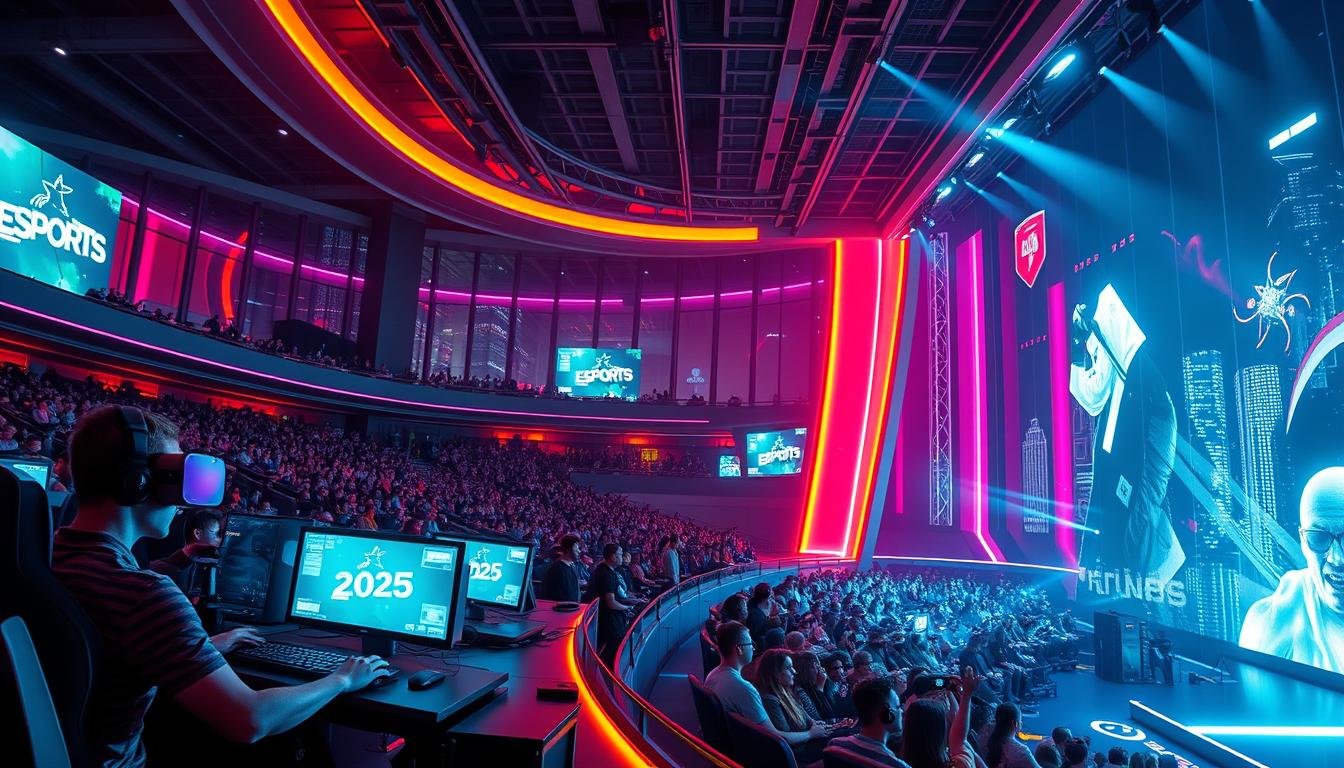
The world of competitive gaming is on the cusp of a revolution. As we look ahead to 2025, it’s clear that esports will continue to evolve at a rapid pace.
Esports in 2025 – What’s New & What’s Next?
With advancements in technology and changes in consumer behavior, the esports landscape is shifting. This article will explore the key trends and innovations that will shape the industry in the coming year.
From new game releases to emerging platforms, we’ll examine what’s on the horizon for esports enthusiasts. Our goal is to provide a comprehensive overview of the current state of esports and what to expect in the future.
Key Takeaways
- The growing importance of virtual and augmented reality in esports.
- New game titles and genres that will gain popularity.
- Emerging markets and regions that will drive esports growth.
- The role of social media and streaming platforms in shaping the esports landscape.
- Key partnerships and collaborations that will impact the industry.
The Current Trajectory of Esports
The trajectory of esports is marked by consistent growth, driven by various factors including technological innovation and changing consumer behaviors. As the industry continues to mature, several key trends and shifts have emerged that are shaping its future.
Key Growth Metrics in 2023-2024
Recent data indicates that the global esports market has seen a significant increase in viewership and revenue. The growth can be attributed to the rising popularity of competitive gaming titles and the expansion of esports leagues and tournaments.
| Metric | 2023 | 2024 |
| Global Viewership | 450 million | 520 million |
| Market Revenue | $1.1 billion | $1.4 billion |
Major Industry Shifts Since 2020
Since 2020, the esports industry has witnessed several significant shifts, including the rise of mobile esports, increased investment from traditional sports teams, and the adoption of new technologies such as 5G connectivity.
“The pandemic has accelerated the growth of esports, forcing the industry to adapt and innovate in response to changing consumer behaviors.”
Pandemic-Era Adaptations That Became Permanent
The COVID-19 pandemic led to several adaptations in the esports industry, including the shift to online events and the development of new formats for competition and spectatorship. Many of these adaptations have become permanent fixtures, enhancing the accessibility and flexibility of esports.
Technological Advancements Reshaping Competitive Gaming
The esports industry is on the cusp of a technological revolution. As we look to the future, it’s clear that technological advancements are transforming the landscape of competitive gaming.
Next-Generation Gaming Hardware and Performance
The latest gaming hardware is pushing the boundaries of performance, with faster processors, advanced graphics cards, and high-speed memory. These improvements enable smoother gameplay, faster rendering, and more immersive experiences. For instance, the introduction of ray tracing and AI-enhanced graphics capabilities is setting new standards for visual fidelity in games.
5G/6G Connectivity and Its Impact on Competition
The rollout of 5G networks and the research into 6G are revolutionizing connectivity in esports. With lower latency and faster data transfer rates, competitive gaming is becoming more seamless and responsive. This enhanced connectivity is crucial for real-time multiplayer interactions and is expected to further professionalize esports competitions.
AI Integration in Training, Analytics, and Game Design
AI integration is having a profound impact on various aspects of esports, from training and analytics to game design. AI tools are being used to analyze player performance, predict outcomes, and personalize training regimens.
Machine Learning for Player Development
Machine learning algorithms are helping players refine their skills by providing detailed insights into their gameplay and suggesting areas for improvement.
AI-Generated Content and Experiences
AI is also being used to generate content, such as dynamic game environments and personalized experiences, enriching the gaming ecosystem.
As these technological advancements continue to evolve, they will undoubtedly reshape the future of competitive gaming, offering new opportunities for growth, innovation, and engagement.
Virtual Reality and Augmented Reality in Esports
As VR and AR technologies mature, their impact on esports is becoming increasingly significant. The integration of these technologies is not only enhancing the gaming experience but also opening new avenues for competition and spectatorship.
Commercial Viability of VR Esports Leagues
VR esports leagues are gaining traction, offering immersive experiences that traditional gaming cannot match. These leagues are attracting significant investments, with major brands recognizing their potential.
Enhancing Spectator Experiences with AR
AR is revolutionizing the way spectators engage with esports. By overlaying digital information onto the physical environment, AR creates a more interactive and engaging experience for viewers.
Mixed Reality Competition Formats
Mixed reality (MR) combines elements of both VR and AR, offering a unique competitive format. MR allows for more accessible and diverse competition formats, bridging the gap between virtual and physical worlds.
| Technology | Impact on Esports | Accessibility |
| Virtual Reality | Immersive gaming experiences | High-end hardware required |
| Augmented Reality | Enhanced spectator engagement | Accessible via mobile devices |
| Mixed Reality | Diverse competition formats | Requires MR-compatible hardware |
The future of esports is intricately linked with the development of VR, AR, and MR technologies. As these technologies continue to evolve, we can expect to see even more innovative applications in the esports industry.